
Lucy Simpkins and the Fight Against the Corn Laws
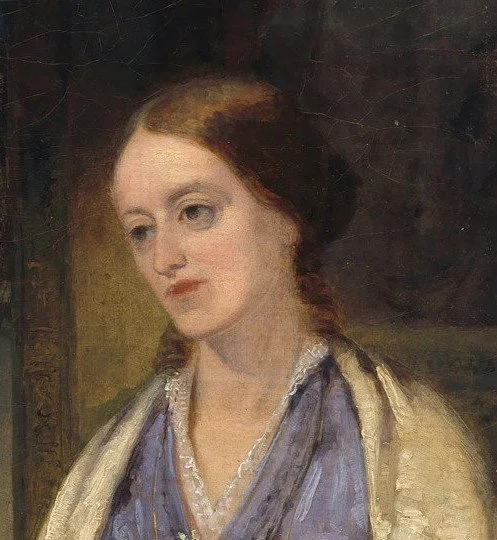
In the 1840s, farm labourers and their families in the villages around Chippenham faced dire circumstances. Low wages and high food prices had created a situation in which basic foodstuffs were increasingly out of reach of many working families. In the minds of local people, including a woman called Lucy Simpkins, the reason for the distress was the Corn Laws.
The Corn Laws were probably the most debated political issue of the 1840s. To protect home producers, the government had increasingly added duties onto imported foodstuffs, and this reached a peak in the years 1838-1846. This action had raised the cost of food. In 1844 and 1845 terrible harvests worsened the situation further for working families. The Anti-Corn Law League was created in the 1830s and agitated in favour of free trade, largely in urban areas. But by 1842 it had begun expanding its campaigning into rural districts.
On an intensely cold and clear night in February 1846, crowds of men, women and children gathered around the ancient stone cross at the centre of the village of Bremhill, a few miles from Chippenham. An observer that night described the scene vividly: some had walked ten or twelve miles after a hard day in the fields. The men, in their smock frocks, appeared like 'white moving patches in the moonlight'; the women looked 'pinched and careworn.' They had come to share their stories and to demand change.
The chairman of the meeting was Job Gingell, a local labourer, who called proceedings to order from the cross's stone steps, a flickering candle in his hand. The labourers and their wives spoke simply and directly, sharing what one reporter called 'their own history of slow starvation.' The meeting drew three journalists: one from the Wiltshire Independent, and correspondents from the London papers the Morning Post and Morning Chronicle. Their reports would be widely reprinted — and fiercely disputed. The Morning Post suggested the gathering had been orchestrated by outside agitators, a charge the Wiltshire Independent hotly rejected.
Towards the end of the meeting, a woman in a long grey coat and old bonnet rose to speak. By the light of Job Gingell's candle, she partly read and partly recited her words. It was Lucy Simpkins. Her speech was passionate and direct:
Don't you think we have a great need to cry to our God, to put in the hearts of our gracious Queen and her Members of Parliament, to grant us free trade, that a poor father and mother may sit down with a great loaf, and give their children a good meal of bread — a long time which they have been strangers to.
The crowd responded with loud cheers. Lucy continued.
News of the Bremhill meeting spread quickly. Reports appeared in the London press on 12 February 1846, and the following day the newly launched Daily News — then under the editorship of Charles Dickens — published its own account. The paper's reporter dwelt at length on Lucy's speech, defending the right of women to speak at such gatherings at a time when others ridiculed it. He argued that women were uniquely placed to articulate their families' suffering.
Dickens himself was no longer editing the paper by that point, but he remained closely associated with it and shared its politics. Within days he had written a poem directly inspired by the Bremhill meeting and by Lucy Simpkins words. Hymn of the Wiltshire Labourers, published in the Daily News on 14 February, was intended to elicit sympathy for the rural poor and support for repeal of the Corn Laws. It painted a landscape corrupted by 'religious, political and economic greed' which ignored the welfare of ordinary people.
The meeting did not go without consequences for those who attended. Farmer Stephen Stiles Jeffreys of Spirthill sacked workers who had been present. References to Bremhill would find their way into the parliamentary debate on the Corn Laws, though the direct influence of Lucy's speech — or Dickens's poem — on Westminster is hard to measure. By early 1846 the political tide had already turned. Prime Minister Robert Peel supported repeal, and later that year the Corn Laws were abolished, though the battle split the Conservative party.
As for Lucy Simpkins herself: after the meeting, she quietly returned to the hard life of a labourer's wife. In later years, her husband William found work as a gardener, which perhaps brought the family a little more security. Lucy died in 1878, aged seventy-five. Her death went unnoticed in the press. But the events of that freezing February night in 1846 were long remembered — and Dickens's poem ensured that the woman who spoke by candlelight at the Bremhill cross was not entirely forgotten.