
Agnes Mylles: Chippenham's Forgotten Witch
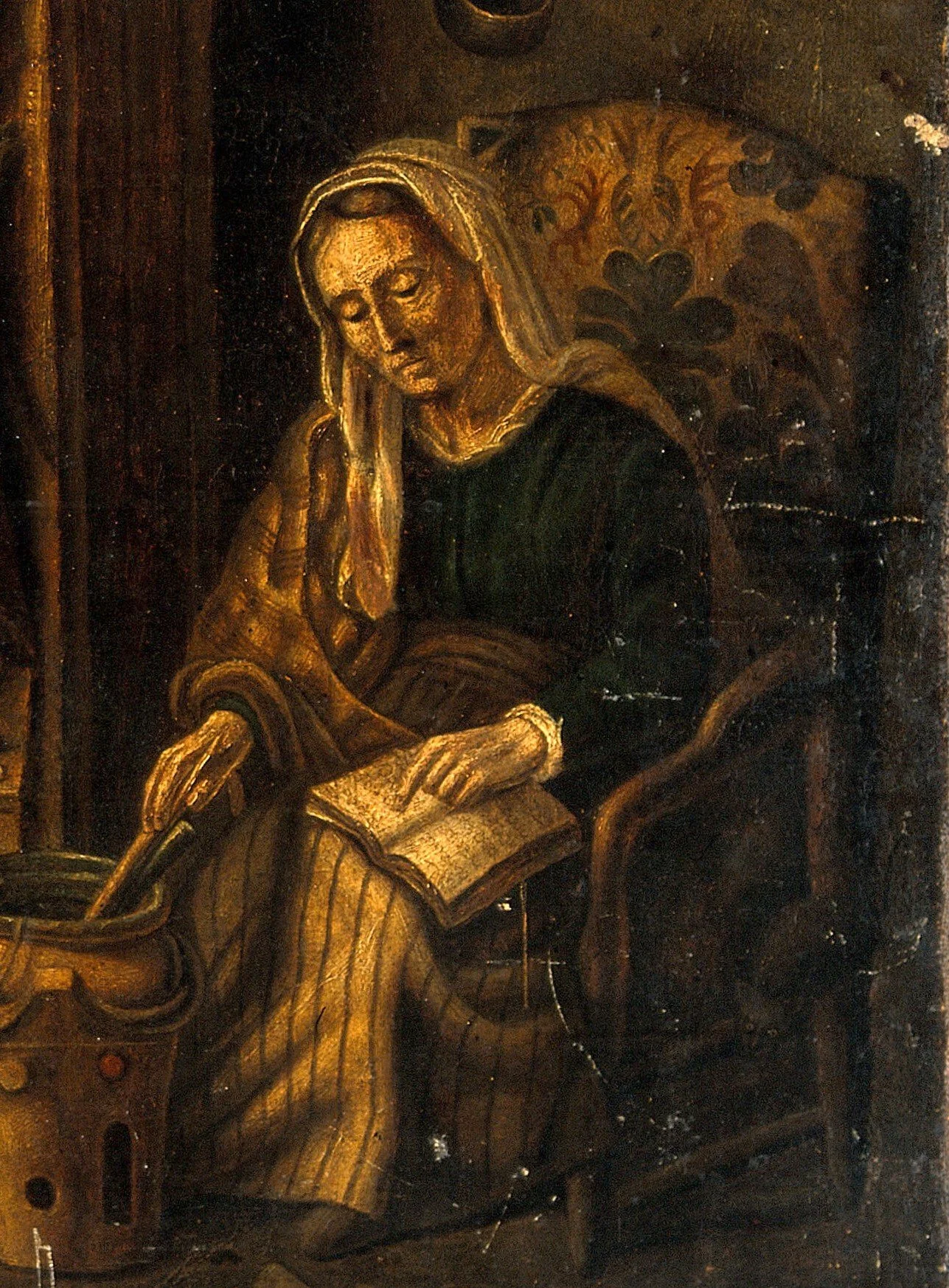
An artistic representation of a witch. Public Domain.
In the spring of 1564, a baby died and a woman was accused of murdering him by witchcraft and was hanged. Her name was Agnes Mylles, a widow from the village of Stanley near Chippenham, and her story — largely overlooked by historians until VCH research brought it to light — makes her the first recorded person to be executed for witchcraft in England.
This is not the witchcraft of popular imagination—there are no broomsticks, no demonic pacts, and no familiars. Instead, Agnes’s story is one of family rivalry, female vulnerability, and the deadly consequences of being in the wrong place at the wrong time.
The world Agnes Mylles inhabited was dominated by the Bayntun family who had acquired Stanley Abbey following Henry VIII's dissolution of the monasteries and were transforming it into a grand mansion. Agnes’s husband, William, had been a tenant of the Bayntuns. However, after his death, Agnes had struggled to maintain their cottage and plot of land. She was economically marginal and socially exposed — exactly the kind of woman who, in Tudor England, might find herself accused.
The Bayntuns themselves were under a different kind of pressure. Edward Bayntun and his wife Agnes — cousin to both Anne Boleyn and Catherine Howard — had waited ten years for the birth of a male child. If they failed to have a boy, their huge estates would pass to Edward's younger brother Henry and his wife Dorothy. Edward and Agnes Bayntun finally had their longed-for son, William, but he died shortly before Easter 1564. In their grief and desperation, they accused Agnes Mylles of causing the baby's death through witchcraft and charms.
The timing was catastrophic for Agnes. Parliament had just passed England's first strictly enforced witchcraft act in 1563, and Bishop Jewel of Salisbury—who had preached before the Queen calling for action against witches—was personally involved in the case. A professional witchfinder, Jane Marshe, was brought in from Somerset. Her investigation implicated not only Agnes but also Dorothy Bayntun, the child’s aunt, whose sons stood to inherit if Edward and Agnes had no more male heirs. A family feud found its ugliest expression in these accusations.
Tragedy piled on tragedy, and Jane Marshe was imprisoned by the Bishop for her trouble, while Agnes Mylles was hanged at the summer Assize in Salisbury, 1564.
The nightmare continued after her death. Dorothy Bayntun fought back in court, and Jane Marshe's testimony shifted under pressure. The legal battles rumbled on; Dorothy escaped punishment but was socially erased, her marriage omitted from the family's official genealogy. Agnes Mylles left no such record of resistance. She was poor, vulnerable, and convenient — and the combination of superstition, law, and power proved fatal.
Her case predates that of Elizabeth Lowys of Essex—sometimes cited as the first person executed for witchcraft in England—as well as the first English witchcraft pamphlet of 1566, which focused on Agnes Waterhouse, another so-called 'first.' Agnes Mylles deserves to be remembered not as a footnote in the history of witchcraft, but as a Wiltshire woman whose story, buried in Chancery records rather than standard Assize documents, might have remained untold without the meticulous local research of the VCH.
Louise Ryland-Epton