
John Aubrey & the Quest for Knowledge
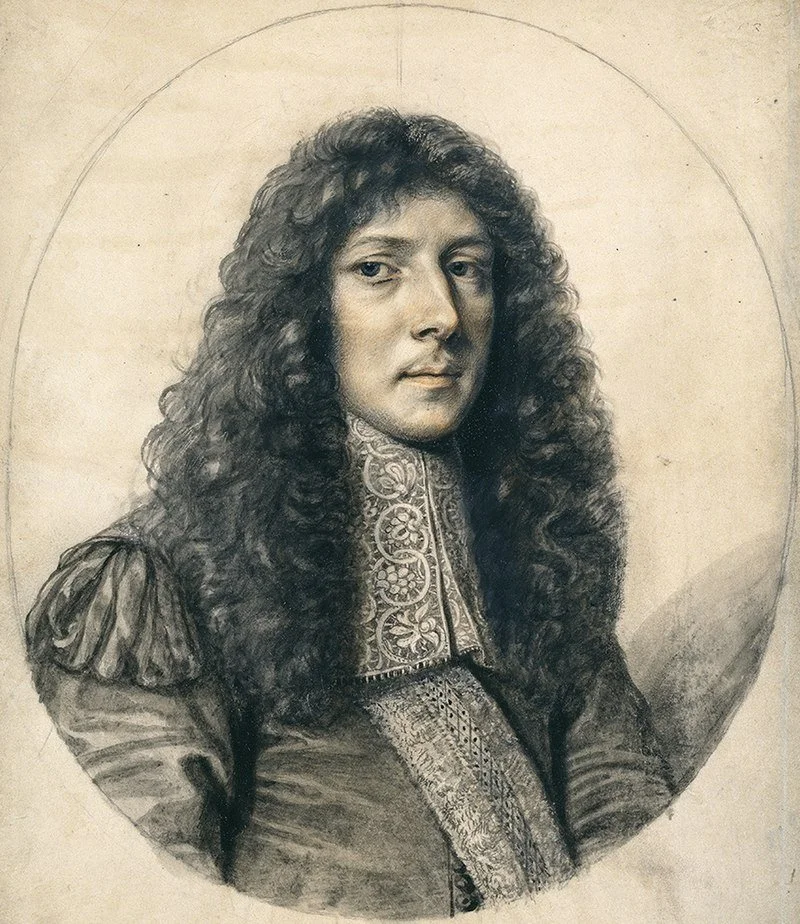
John Aubrey was born ‘very weak and like to dye’ at Lower Easton Piercy in Kington St Michael on 12 March 1626. But he survived, and as an adult, he continued to cheat death. He survived smallpox. He was shipwrecked in 1660. In 1664, he suffered a ‘terrible fit of the spleen and piles’ while on the Continent and also endured an accident involving his genitalia, which, according to his own account, ‘was like to have been fatal.’ In 1666, he spent a year ‘under an ill tongue’, possibly acknowledging a witch had cursed him. In other adventures, he was almost drowned (twice) and was nearly murdered by the Earl of Pembroke in 1669. In 1673, he was ‘in danger’ of ‘being run through with a sword’ by a lawyer while a guest of Mr Burges at Middle Temple and nearly ‘killed by a drunkard in the street of Gray’s Inn by a gentleman whom I never saw before’. However, it was his disastrous romantic relationships with women that changed the course of his life, leading him to lose large sums of money in lawsuits, and eventually forced him to sell the family estate at Lower Easton Piercy in Kington St Michael in 1670. Thereafter, he had no permanent home, and was supported instead by his friends, of whom he thankfully had very many. He was charming, warm and popular, but was ill-disposed to business, preferring a life of ‘literary ease’.
In an age of division, Aubrey maintained connections across political, religious, intellectual and cultural divides. He listened to the opinions of intellectuals, royalty, aristocracy, merchants, tradesmen, farmers, men and women, from the king to those who survived by shovelling dung, all life and all knowledge was interesting. He was according to Professor Peter Davidson ‘an antiquary, natural philosopher, biographer, folklorist, protoanthropologist, architectural historian, travel writer, topographer, and an experimental scientist in an age before most of these disciplines existed’. To this list we might add mathematician, playwright, artist and more — a man, in short, who could not stop himself engaging with the world.
Aubrey’s intellectual curiosity began in his childhood, and consequently anecdotes and sketches of Kington St Michael, Chippenham and the surrounding area pepper his manuscripts. Sadly, none of his local work was published during his lifetime. In this, his 400th anniversary, Chippenham Museum will host an exhibition, ‘Wiltshire and the World: John Aubrey and the Quest for Knowledge’ from 12 June to 19 September. In it, the work of this remarkable man is explored — including how the local 'formed stones' he identified as petrified sea creatures, and we now call fossils, led him to conjecture about early earth history. He hinted at the unthinkable centuries before Darwin, that perhaps God did not make the world perfect and the earth was older than several thousand years. We encounter too Aubrey's exquisite landscapes of the Kington St Michael area — among the earliest examples of pure landscape depiction in Britain — alongside his local observations of the natural world, his sense that man and nature were deeply interconnected, and his disquieting awareness that human activity was changing the world around him.
Alongside the exhibition, this anniversary year also sees the first complete publication of Aubrey's Natural History of Wiltshire, edited by me and published by Hobnob Press. Aubrey worked on this extraordinary work for much of his adult life, yet it never appeared in print during his lifetime. It ranges across everything — the geology, plants, wildlife, weather, folklore, customs and curiosities of the county he loved — and returns again and again to the landscape of his childhood around Kington St Michael and Chippenham. To read it is to see Wiltshire through the eyes of one of the most restlessly curious minds of the seventeenth century. Four hundred years after his birth in this corner of the county, Aubrey's Wiltshire has never felt more vivid, and a worthy subject to be showcased in the Chippenham Our History Festival. I hope you will join us.
Louise Ryland-Epton