
Victor Cazalet: Chippenham's Wartime MP, and an Unwritten Chapter of Its History
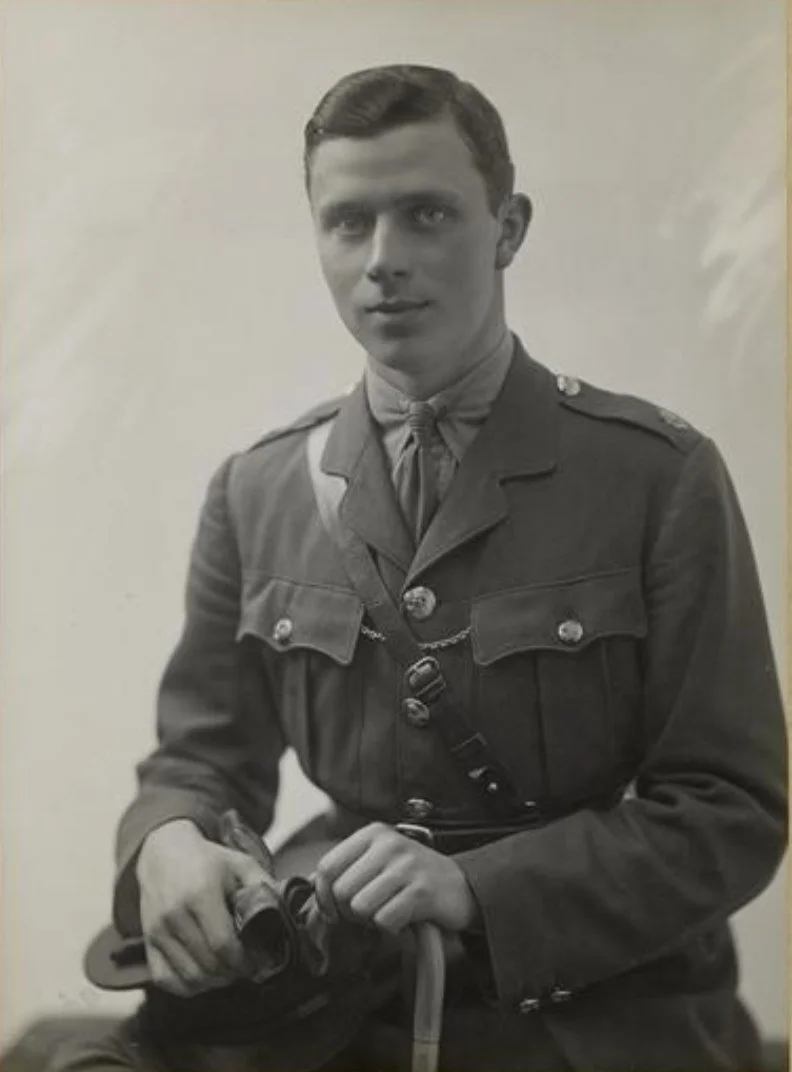
Victor Cazalet pictured in the 1910s.
For nineteen years, Chippenham's voice in Parliament belonged to a man whose private life he could never publicly acknowledge.
Victor Cazalet became Conservative MP for Chippenham in 1924, having already won the Military Cross for gallantry in the First World War. He held the seat until his death on 4 July 1943, killed alongside Polish leader General Sikorski when their plane crashed on take-off from Gibraltar; a crash that remains, to this day, the subject of historical controversy.
Cazalet was gay, at a time when homosexual acts were criminal offences in Britain. As an unmarried MP, he regularly faced scrutiny over his bachelorhood, which the press and political opponents treated as something requiring explanation. Gay men of his generation lived in subterfuge — ruffling the sheets in a spare bedroom to suggest a lover had stayed there, swapping pronouns when speaking of a partner. Cazalet moved within a loose circle of MPs, several of them gay or bisexual, derisively nicknamed the Glamour Boys by Neville Chamberlain, a label widely understood as an insinuation about their sexuality. Historian Chris Bryant has argued that these men's first-hand familiarity with pre-war Germany, including its persecution of homosexuals, gave them an early and visceral understanding of the Nazi threat and that without their warnings, Britain might never have gone to war with Hitler at all, nor Churchill become prime minister.
Cazalet's own road to political conviction looks rather different in the official scholarly record. The Oxford Dictionary of National Biography (ODNB) attributes his passionate advocacy for Jewish refugees and a Jewish homeland in Palestine to the influence of Chaim Weizmann and Blanche Dugdale from the mid-1930s, rather than to any first-hand experience of persecution. In July 1938, he warned the Commons that 'never since Milton immortalised the slaughter of the Albigenses has a whole community been in such danger.' His very last speech in the chamber, on 19 May 1943, reported the stories then circulating of 'the horrors of the massacres at a camp called Treblinka.'
Cazalet's record reached well beyond this one cause. He campaigned for married women's right to retain their own nationality rather than being forced to adopt their husband's. He pushed for import controls to stop important artworks from leaving Britain. During the Depression, he startled fellow MPs by proposing that they take pay cuts themselves.
What is striking, reading the ODNB's careful, detailed account of Cazalet's life and death, is what it does not mention at all: his sexuality goes entirely unremarked. Bryant has pointed out that an earlier biography of Cazalet 'omitted any reference to his homosexuality' altogether. The ODNB's silence looks like more of the same. Recovering this part of his story does not diminish the rest; it completes it, restoring a dimension of risk and courage that the official record quietly left out.
Cazalet's reach extended well beyond Westminster, too. In London he befriended the American art dealer Francis Taylor and his wife Sara, and became close enough to the family to be asked to serve as godfather to their young daughter — the future film star Elizabeth Taylor. After lunching with Churchill in 1939 and judging that war was coming, Cazalet urged the Taylors to leave England while they still could; Sara and the children sailed for America that April, narrowly ahead of the outbreak of war that September.
This Pride season, with Chippenham's own celebrations recently held, it feels right to remember Victor Cazalet not only as the town's wartime MP, but as one of its own LGBTQ+ histories — a reminder that the people who shaped Chippenham's past were more varied, and braver, than the record often allowed them to appear.
Louise Ryland-Epton